

Thank You from St. Vincent de Paul Ministry!
Thank you to everyone that donated cans for our Holiday Food Drive!
Thank you to everyone that donated cans for our Holiday Food Drive! For any that would still like to make a donation before December 21st, $10 or $20 gift cards (Safeway and Food Max) are welcome.


Stay Awake, Keep Alert, Be on Guard”
Homily on “Stay Awake, Keep Alert, Be on Guard” based on the Gospel of Matthew 24:37-44 and Letter to the Romans 13:11-14:
In Jesus’ time, the problem Jesus faced was NOT that no one was waiting for the Messiah; NOT that NO one was looking for a savior, but the problem was that Jesus turned out to be a different Messiah from what the people were waiting for.
Similarly – our own concepts of what or who God is could be our own obstacle to knowing and encountering God. We could be blinded by our own concepts and prejudiced ideas of what God is – of Who Jesus is; of how God would come into our lives. The truth of the matter is that people did not recognize Jesus then and they do not recognize Him now. Just as John the Baptist declared: “There is one among you whom you do not recognize (Jn 1:26).

Homily on “Stay Awake, Keep Alert, Be on Guard” based on the Gospel of Matthew 24:37-44 and Letter to the Romans 13:11-14:
In Jesus’ time, the problem Jesus faced was NOT that no one was waiting for the Messiah; NOT that NO one was looking for a savior, but the problem was that Jesus turned out to be a different Messiah from what the people were waiting for.
Similarly – our own concepts of what or who God is could be our own obstacle to knowing and encountering God. We could be blinded by our own concepts and prejudiced ideas of what God is – of Who Jesus is; of how God would come into our lives. The truth of the matter is that people did not recognize Jesus then and they do not recognize Him now. Just as John the Baptist declared: “There is one among you whom you do not recognize (Jn 1:26).
As one author wrote: The world did not recognize Jesus then because:
They were looking for a Lion, He came as a Lamb.
They were looking for a Warrior, He came as a Peace maker.
They were looking for a King, He came as a Servant.
They were looking for their temporal needs to be met. He came to meet their eternal needs.
They were looking for Liberation from Rome, He submitted to the Roman Cross.
AND - It is NOT ONLY in terms of WHAT the Messiah will be like but there were and even in our time, there are still misconceptions as to WHEN and HOW the Lord will come.
Do you hear the admonition for this first Sunday of the church’s year? Stay awake! Keep alert! Be on guard! What does that mean?
Sometimes the Second Coming of Christ is spoken of in the New Testament as a grand, cosmic event in which Jesus will descend on clouds from heaven. Trumpets will sound, the dead will be raised, and Christ will return in glory. But - Today we have another image of Christ’s coming. In our Gospel from Matthew, we hear Jesus say that the Lord will come like “a thief in the night.”
Meaning - God comes to us in unexpected, surprising ways. This is actually what we celebrate during Advent and at Christmas?
What the incarnation means for us, and what we celebrate throughout this holy season, is that God is with us.
The Incarnation is actually a scandal to other religions because they cannot accept the truth that the Almighty God can be one of us, with us, in us.
The challenge for us is to be spiritually alert and watchful which is the true meaning of Advent but unfortunately Advent has become an almost routine season. Stay awake! Keep alert! Be on guard! Because - Who knows how God will come when He comes to us?
So – how do we prepare – How do we “Stay awake! Keep alert! Be on guard!”
That’s the challenge for all of us: Our real worry should not be that the world might suddenly end or that we might unexpectedly die, but our concern must be that we might live and die, ASLEEP, so to speak - meaning – that we live and die without really loving, without properly expressing our love, and without tasting deeply the real joy of living because we are so consumed by the business and busy pressures of living that we never quite get around to fully living.
Therefore, we must always “Stay awake! Keep alert! Be on guard!”
Father Anthony DeMello, a Jesuit priest said: Spirituality means waking up. Most people, even though they don't know it, are asleep, so to speak. They're born asleep, they live asleep, they marry in their sleep, they raise children in their sleep, they die in their sleep without ever waking up. Meaning - They never understand the loveliness and the beauty of this thing that we call human existence.
You see - being alert, awake, and vigilant in the biblical sense is not a matter of living in fear of the world ending or of our personal lives ending. Rather it is a matter of having love and reconciliation as our chief concerns. It is a matter of being grateful, thanking, appreciating, affirming, forgiving, apologizing, and being more mindful of the joys of living in human community and within the sure embrace of God.
We need to be awake spiritually. Again, the end of the world should NOT concern us, nor should we worry excessively about when we will die. What we should worry about is: IN WHAT STATE our dying will find us.
To give you a practical example:
This is also the season of holiday parties … You can pretty much imagine some people standing in front of their closets – anguishing - with the silent cry, “What am I going to wear?”
From our Second Reading today, St. Paul urges the Romans to find a renewed intimacy with Christ. The metaphor Paul uses for this intimacy is drawn from the closet. The apostle asks his readers to “put on Christ.” To “Put on Christ” means to dress our inner person, not the outer body, and “to put on Christ” is thus a call to place priority on our relationship with God more than our relationships with the world.
When you get dressed each day, for whom are you dressing? Perhaps some of you would answer that you dress only to be comfortable. But most of us would have to admit that much of the effort, and anxiety, we spend over what we are to wear and style - have much more to do with the opinions of those around us. And many of us simply dress in such a way that even the stranger we meet on the street will think well of us if we dress nicely.
But Paul encourages us to dress the inner person with more attention than we give to dressing up our body. To “Put on Christ” is a call to the follower of Christ to hold God as close as an inner garment. St. Paul is telling us to strive to please God, the One who looks upon the heart rather than the face, to dress the soul more carefully than the body. As Thomas Merton observed, “the very desire to please God, pleases God.” It is our highest calling and purpose.
AND “putting on Christ” is also a matter of the way we live in relation to other people… our neighbor.
How do we please God? What are the “garments” of the well-dressed soul? We cannot serve God or love God without also serving and loving our neighbor. Paul was very specific. If we would put on Christ, we must “behave decently;”
– Meaning - We are to enjoy life but in moderation (“not in orgies and drunkenness”);
We are to enjoy relationships of intimacy but within God’s plan for marriage (“not in sexual immorality or lust”)
We are to enjoy honest and real friendships with companions and co-workers (“not in rivalry or jealousy”).
So, what are we going to wear this Advent season? Today is the beginning of our season of introspection, of examining our conscience, of renewing our covenant relationship with God and season of spiritual preparation for the coming of Christ… just as Lent is the season of spiritual preparation for Easter.
Let us dress appropriately spiritually.
Let us clothe our minds with thoughts of repentance.
Let us wrap our hearts in hope for God’s coming. Let us gird our souls in glad service of the poor and powerless for the love of God.
So, when we stand before our packed closets, instead of asking “Which of these clothes should I wear?,” may the Christ who was born in a borrowed cave, wrapped only in a few strips of cloth, and who died on a cross wearing even less, - May He call us to ask the more important question, “Which of these clothes can I give away?”
1ST SUNDAY OF ADVENT – CYCLE A
December 1, 2019
Matthew 24:37-44; Romans 13:11-14

31st Sunday in Ordinary Time: Every Saint Has a Past, and Every Sinner Has a Future...
I asked a seminarian as to what or who inspired him. He said: “If the saints can do it, we can do it.
How grateful we are for the saints. Their courage and example inspire and encourage us. Actually - We are all called to be saints because only saints can enter heaven. Many of us, even the best of us, will not go straight to heaven, but will have to spend time in purgatory, so to speak, to purify us from the consequences of our sins and from our sinful inclinations before we enter heaven.
That is why – aim high - aim to be saints – aim for heaven. If you miss – you will end up in Purgatory but if you live your lives aiming minimally only for Purgatory, if you fall short – well, you know what that could mean…
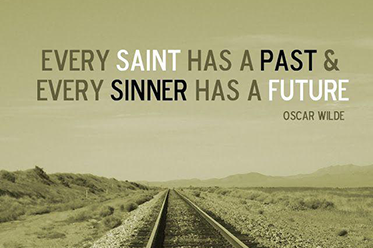
Homily on “Every saint has a past, and every sinner has a future” based on the Gospel of Luke 19:1-10:
I asked a seminarian as to what or who inspired him. He said: “If the saints can do it, we can do it.
How grateful we are for the saints. Their courage and example inspire and encourage us. Actually - We are all called to be saints because only saints can enter heaven. Many of us, even the best of us, will not go straight to heaven, but will have to spend time in purgatory, so to speak, to purify us from the consequences of our sins and from our sinful inclinations before we enter heaven.
That is why – aim high - aim to be saints – aim for heaven. If you miss – you will end up in Purgatory but if you live your lives aiming minimally only for Purgatory, if you fall short – well, you know what that could mean.
When we compare our lives to the saints, it seems the saints lived in an entirely different world than ours. Our service seems insignificant compared to the glorious stories of the saints.
So – it makes one wonder, are there any more saints - around - these days?
Of course, the answer is “yes” – not only among priests and religious.
The truth is, modern-day saints in the making seem much more ordinary, much like you and me. You see - the Saints whom we honor – actually, at the time they were living – they were not even aware that they were living saintly lives. In fact, there is a saying – “A saint is a saint until he or she knows it”… meaning – When one becomes so self-conscious of one’s goodness more than one’s need of God’s mercy, that is when pride and ego and self-righteousness come in and that is the danger.
The saints actually would have been surprised to know anyone would remember their good deeds and words, and they would have been humbled by our stories of how we honor them. Perhaps most of them would correct us because of how much we exalt them because they know that they, too, experienced times when they were afraid, when they were unsure of their faith, or when they were impure with their motives.
Meaning – the lives of the Saints give us examples of God’s merciful and gracious work in their lives… like today’s Gospel story of Zacchaeus which gives ordinary people like us great hope. Zacchaeus story is the story of a little, lonely, sinful man who had an encounter with Jesus and that encounter with Jesus changed his life in a very big way. If Zacchaeus can change, we can change.
Zacchaeus was a tax collector. Even worse, he was a chief tax collector. Don’t think IRS here. Think Mafia or those drug dealers in terms of badness. The tax collectors were local Jews who purchased their tax collection job from the Romans, and then collected the hated taxes for the hated Romans from their neighbors, plus whatever extra they could squeeze on top for themselves.
Tax collectors were greedy enough to turn against their own family and friends to turn a profit. That is how bad they were. And so as you can imagine, tax collectors were wealthy but without friends. They were outcast from the Jewish synagogue, and every other gathering of Jews in town. So despised were tax collectors in the first century, that the phrases “tax collector” and “sinner” were considered synonymous.
With that background, that gives us a better perspective as to why the people grumbled when Jesus decided to stay and eat at Zacchaeus’ house. The point is - Jesus has come to seek and to save those who are lost. Even before sinners are seeking God, God is already seeking them. And sinners do not have to clean up their act before God will love them; rather it is God’s love offered first that causes a sinner to want to clean up his or her act. When he becomes aware of how much God loves him.
There is a phrase – “Every saint has a past, and every sinner has a future.” That is the hope that keeps us all humble, and gives each of us the chance we do not deserve - to be accepted by God.
Here is the difference between Jesus and us. Most of the time we wait for people to change before we accept and love them. We tell people, “You change, if you want to be accepted and loved.” Sometimes we do this - thinking - this is the Christian way. This is not the way of Jesus. For Him - You love people first. You accept them where they are, who they are, and as they are.
Love has the power to change people. This is the Good News… This is the Gospel. This is the miracle of grace.
In the Gospel, there is not a single negative word from Jesus to Zaccheus. Jesus only said “I want to go home with you and be your guest.” Jesus’ acceptance became the means by which Zacchaeus could change.
Admittedly - It does not sound realistic, does it? But this is God’s way of changing people. This is how people are converted. God does not wait for us to stop being sinners before extending His grace to us. As St. Paul wrote to the Romans: “While we were yet sinners, Christ died for us.” (Romans 5:8). God’s gracious acceptance of us - as we are - makes change possible.
This approach, which sounds so unpromising, makes perfect sense - when YOU are Zaccheus. Meaning - Imagine – you - being Zacchaeus – put yourself in the shoes of Zacchaeus - If the rabbi from Nazareth insists that you change, you will probably ignore him and shut him out of your life.
- But what if He looks at you tenderly – with care, with concern especially when no one else does? What if he calls you by your name, the name you first heard from your mother’s lips? What if he says to you that he wants to go home with you, that he wants to spend time with you in your world? You will most likely fall out of the tree getting down from it quickly. That is Jesus’ way.
Jesus calls us to participate in His ministry, to continue what he started. Believe it or not, we all have the same power – by virtue of our own baptism – the same Spirit - to do something of what God in Christ has done. We can love people, if we will, with an acceptance that has the power to change them. We are called to love people to conversion.
Practical application: If you want your spouse or family member to change, you change first and be more like Christ…be in communion with Christ. Then you can love your family more than you can ever love them, you can forgive them more than you can ever forgive them. If you want your spouse or family member to change, do not nag them. Love them to conversion.
Zacchaeus was a new man after the meal with Jesus. He gave away half of his money to the poor, and paid back four-fold every person he had cheated (which pretty much was the entire town!). He gave away his wealth, but Zacchaeus gained a community of faith and friendship.
About a week later, Jesus, on the cross – was again in the presence of thieves… Crucified between two thieves and with His last breath, Jesus showed again that He welcomed every sinner, every crook who would accept a chance to sit at the banquet table of God. Why? Because – as we heard in the Gospel - Jesus had come to seek and to save those who are lost… People like you and like me.
So – my brothers and sisters in Christ - when you approach the table of the Lord today, think about that. Come humbly. Come gratefully, and let us all leave the church after our celebration this morning - a changed person… As we are sent at the end of the Mass - Go in the peace of Christ – glorifying the Lord by your very life.
As I mentioned before, in essence, the Mass never ends. It must be lived.
Amen.
31st SUNDAY IN ORDINARY TIME – CYCLE C
NOVEMBER 3, 2019
The Text: Luke 19:1-10

Parish Fruit Trees
We are planning to plant fruit trees along the hillside by the upper parking lot. If you have any fruit seedlings, we would be happy to have them planted on the hill!
Please contact the Parish Office at 707-553-1355 or stcatherine@stcsv.org if you are interested in donating any seedlings or volunteering for the project.

We are planning to plant fruit trees along the hillside by the upper parking lot. If you have any fruit seedlings, we would be happy to have them planted on the hill!
Please contact the Parish Office at 707-553-1355 or stcatherine@stcsv.org if you are interested in donating any seedlings or volunteering for the project.

Mission- More Work, More Grace

Today is World Mission Sunday - a day set aside for Catholics worldwide to revive our missionary awareness and commitment…a day to reflect on how to pass on the faith.
We recommit ourselves to our common vocation, by virtue of our Baptism, to be missionaries, through prayer, participation in the Eucharist, and by providing financial support and concrete help to all the missions of the world".
Today we share in those celebrations taking place in every parish, seminary, school and convent all over the world.
In the Gospel - Jesus told His disciples and is telling us about the necessity to pray always and not lose heart.”
Let us pray especially for Missionaries for perseverance and for them not to lose heart.
St. Francis Xavier, S.J. , along with St. Therese of Lisieux, the Little Flower - are the patron saints of missionaries. Let us ask for their intercessions for missionaries and all missionary works.
Talking about missionaries - Our Pastor Father Glenn actually is a missionary belonging to the Mission Society of the Philippines… Actually, he was in Korea for at least15 years and spent some time in Bangladesh; and so, let us pray for Fr. Glenn and provide him all the support we can in any way and let us pray for all MSP missionaries.
Please always include Father Glenn in your prayers. Let us also pray hard that God will send a parochial vicar to our parish as soon as possible so Father Glenn can find time to rest. Every now and then we check on Father Glenn because we are concerned about him and, being a true missionary, he said: “More work, more grace.” Inspiring! There is so much truth in that.
The will of God will not take us to where His grace cannot sustain us.
The more we share our faith, the stronger our faith becomes.
The Mission Society of the Philippines (or MSP) was established by the Catholic Bishops' Conference of the Philippines (CBCP), and so the MSP serves as the official and chief missionary arm of the Catholic Church of the Philippines… as a gift to the world in gratitude for the faith and blessings brought to the Philippines also by missionaries.
The MSP now has been working in five continents and at least twelve countries in the world including the United States and that is why Father Glenn is here and we are so blessed.
One of the many missionary visions or goals of MSP is to instill missionary consciousness to the Filipino migrants, making them partners and instruments of missionary vocation.
And so – let us use ourselves as an example. We - who are migrants here in America – we are here not just to enjoy ourselves with the comforts and pleasures and material prosperity – we have a mission - there is a reason why we are here… in fact – we have a mission wherever we find ourselves in.
We are all so blessed…. And our Blessings come with a mission.
Pope Francis, a Jesuit priest, a missionary himself said: “I am a mission, always; you are a mission, always; every baptized man and woman is a mission.”
St. Teresa of Calcutta said and it is still true today: “There are many in the world who are dying for a piece of bread but there are many more dying for a little love. Being unwanted, unloved, uncared for, forgotten by everybody, I think that is a much greater hunger, a much greater poverty than the person who has nothing to eat.”
She said: “The greatest disease in the West today is not physical illness or disease; it is being unwanted, unloved, and uncared for. We can cure physical diseases with medicine, but the only cure for loneliness, despair, and hopelessness is love.
The poverty in the West is a different kind of poverty -- it is not only a poverty of loneliness but also of spirituality. There's a hunger for love, as there is a hunger for God.”
Therefore – we should see the West – America for example – as our mission field. We live in a very secular and even atheistic society to say the least.
Pope Emeritus Benedict XVI said: “The world offers you comfort, but you were not made for comfort; you were made for greatness.” - meaning – we were made for holiness… set apart for God. We are in this world – but not of it.
We always have to remember as the Scripture says: Much more has been given to you – much more is expected of you. And we need to share this vision and mission to our children who are born and raised here for them to continue the mission… and so we need start in our own families. We need to tell our children our faith stories.
Those of us who made it here in America – we are not only so materially blessed in so many ways – we also have the freedom – including freedom to practice our faith unlike in many areas in the world. In fact, there is too much of everything here in our society – materially and in terms of freedom – anything goes pretty much including morally - that people lose sight of what really matters in life and that is the danger for all of us.
If we are not careful – we who migrated here, we initially might have been materially poor but spiritually rich when we left our country but because of attractions and attachments to material things and comfort and pleasure and new found freedom – we might be finding ourselves now – materially rich but spiritually poor… and worse even – there are those – both financially poor and spiritually poor.
For many of us who are first generation immigrants – coming from a Third World Country like the Philippines - We know what it is like to be without – we know how to persevere and not lose heart and not lose hope even in the midst of struggles and pains - that is a gift we need to share with those who were born with a silver spoon – so to speak - who do not know how to deal with sufferings and struggles in life.
Reality check - Life is getting tougher and tougher even here in America – illness due to too much pleasure and too much consumption of all kinds; violence, financial problems, degradation in moral values, etc.
Many people around us do not know how to deal with struggles – their threshold for pain is so low and so they are the ones who give up on life so easily because they do not know any better.
And so – as Christians – we are called to be light of the world, the salt of the earth and source and instruments of hope.
Only in Christ, can humanity find hope. (St. Pope JPII)
"The Lord always reminds us how precious we are in His eyes, and He entrusts us with a mission." (Pope Francis)
St. Teresa of Avila said it so beautifully: Christ has no body now on earth but yours. Yours are the feet with which he walks to do good; Yours are the eyes with which He looks with compassion on this world; Yours are the hands with which He blesses all the world. Christ has no body now on earth but yours.
We say in our Profession of Faith: We believe in one, holy catholic and apostolic church. We are the apostolic church. The word “Apostle” means “one who is sent to deliver or proclaim the teachings to others.
That is why at the end of the Mass… after having been nourished by God’s word, His Body and Blood, we are sent to go out there into the world in the peace of Christ, to glorify the Lord by our very lives…. By proclaiming the Good News of God’s love, grace and mercy in Christ by our very lives.
Actually, in essence, the mass never ends. It must be lived.
God bless…
29th SUNDAY IN ORDINARY TIME – CYCLE C
OCTOBER 20, 2019 - Luke 18:1-8
Living by Faith

Homily on “Living By Faith” (based on the Reading from the book of the Prophet Habakkuk 1:2-3; 2:2-4 and the Gospel of Luke 17:5-10):
Today’s first reading comes from the Prophet Habakkuk. Habakkuk lived around 650 years before the Lord. It was a time of violence. The Babylonians were threatening or attacking the rest of the world, including the kingdom of Judah. Hatred and violence were seen as part of life, and so the prophet Habakkuk cried out for help and deliverance.
The history of our faith is filled with stories of deliverance.
The most popular of all is the Exodus, the story of deliverance of the Israelites from slavery in Egypt to the Promised Land. The Exodus has represented salvation and deliverance for people of faith.
And there are many other stories - People delivered from fiery furnaces and lions’ dens, from giants, from devils, and from mighty armies; delivered from famines, floods, and terrible diseases, even from death. So, the people of faith understand God as a God who acts, who acts for our deliverance… as our Savior because we cannot save ourselves.
We all have our own deliverance stories – from illness, strained relationships, financial struggles, violence, poverty, abuse, … and because of them, hopefully, they strengthened our faith in God.
But – admittedly – our stories have not always been stories of deliverance. What about those times when deliverance did not come? – when it seems our prayers were not answered? Does that mean we did not have enough faith as those people we hear about who have survived through major tragedies and struggles in life?
Let me share three points to ponder:
First - When deliverance doesn’t come, it does not change who God is.
God is still God. God remains the same. Often, God’s methods or ways are not our ways – and are unknown to us.
God’s ways are simply a mystery. Sometimes we cannot know why things happen as they do - but this does not change who God is. God remains our loving, gracious and merciful Father. He will always love us.
Secondly - When deliverance doesn’t come; when our prayers are not answered, it does not necessarily mean we are being punished.
It is possible that we are experiencing the consequences of irresponsible decisions. But all suffering is not punishment. As a matter of fact, both the scriptures and church history show us that the most godly people are often the ones who suffer most.
Think of all the good people, perhaps some of the finest Christians you yourself have known, for whom deliverance has not come. Think of our Lord in Gethsemane. Even for him there was not the kind of deliverance for which He prayed. We should not always complicate our experiences of suffering by adding guilt. When deliverance doesn’t come, again, it doesn’t necessarily mean we are being punished.
Thirdly - When deliverance doesn’t come, it does not mean there is no grace.
Sometimes deliverance and grace are not the same thing. The deliverance that God provides is not always the kind of deliverance we might choose for ourselves - but it is always the victory of grace… maybe not delivering from pains and struggles but overcoming them by the grace of God. God promised that He will always be with us in our struggles in life.
And the Good News is – if you really think about it, sometimes when deliverance has not come, we have ended up actually finding more grace, finding more of God, finding more of ourselves than we would have - if the deliverance we wanted had come – we could say it is a “blessing in disguise”, so to speak.
God, in his infinite wisdom and permissive will, somehow allows us to suffer because He can bring good out of something seemingly bad.
The truest meaning of faith is the capacity to believe, even when no answer to our problem or even when no healing comes – in the way and time we want them. True faith is trusting that God’s grace is sufficient, and will ultimately triumph over all things. As one popular song goes: “He makes all things beautiful in His time.”
Listen again to the Old Testament prophet Habakkuk from our first reading:
How long, O LORD? I cry for help but you do not listen!
I cry out to you, "Violence!" but you do not intervene.
Why do you let me see ruin; why must I look at misery?
Destruction and violence are before me; there is strife, and clamorous discord.
Then the LORD answered me and said:
Write down the vision clearly upon the tablets, so that one can read it readily.
For the vision still has its time,
presses on to fulfillment, and will not disappoint;
if it delays, wait for it,
it will surely come, it will not be late.
What is that vision? The big picture - God’s vision of the world. His plan is still unfolding. God knows what He is doing with the universe.
Let us pray for wisdom every day. Wisdom is seeing things and events, seeing ourselves and seeing other people, seeing our current circumstances and reality as God sees them. We need to pray for wisdom everyday.
Let us put our faith in God’s love and mercy – even if it seems to be taking forever – let us not give up.
So – if it delays – What are we supposed to do? WAIT!
Admittedly - like Habakkuk, we lament and complain – we get impatient - How long O Lord?
We can all relate and identify with that prayer and must have expressed it ourselves. At times – we get to a point in our life – we get frustrated - we just do not know what to do anymore and we start to question why God does not do something.
How long? Listen to the answer: “If it delays, wait for it, it will surely come, it will not be late.” - in God’s time… in God’s good time, in God’s ways, in God’s plan which holds everything together.
We all have our own problems of all kinds – losing a loved one, illness, financial problems, relationship problems, … and recognizing our own weaknesses, we come together today to pray for faith and for the courage to live our faith and for the grace to accept the complexities of life… that God works in ways we do not easily perceive or understand.
Faith is confidence in the will and purpose of God which gives us the power to endure whatever may come.
Let us pray that we continue to put our trust in God and in His Divine Providence.
Like the apostles, we pray: “Lord, increase our faith.”
So - If you think you have been given a difficult role in life, or if your faith leads you to face steep challenges, continue to give thanks to God. He obviously has great plans for you and me. God has given us the faith we will need. Let us use that faith, and we will see God do what we could not do on our own.
Like the servants in the Gospel, we continue to be faithful and we continue to serve God, do His will as He commanded … and that is all. To God, and not to us, be the glory. What greater joy could there be than that?
God bless…


Rich Man and Lazarus

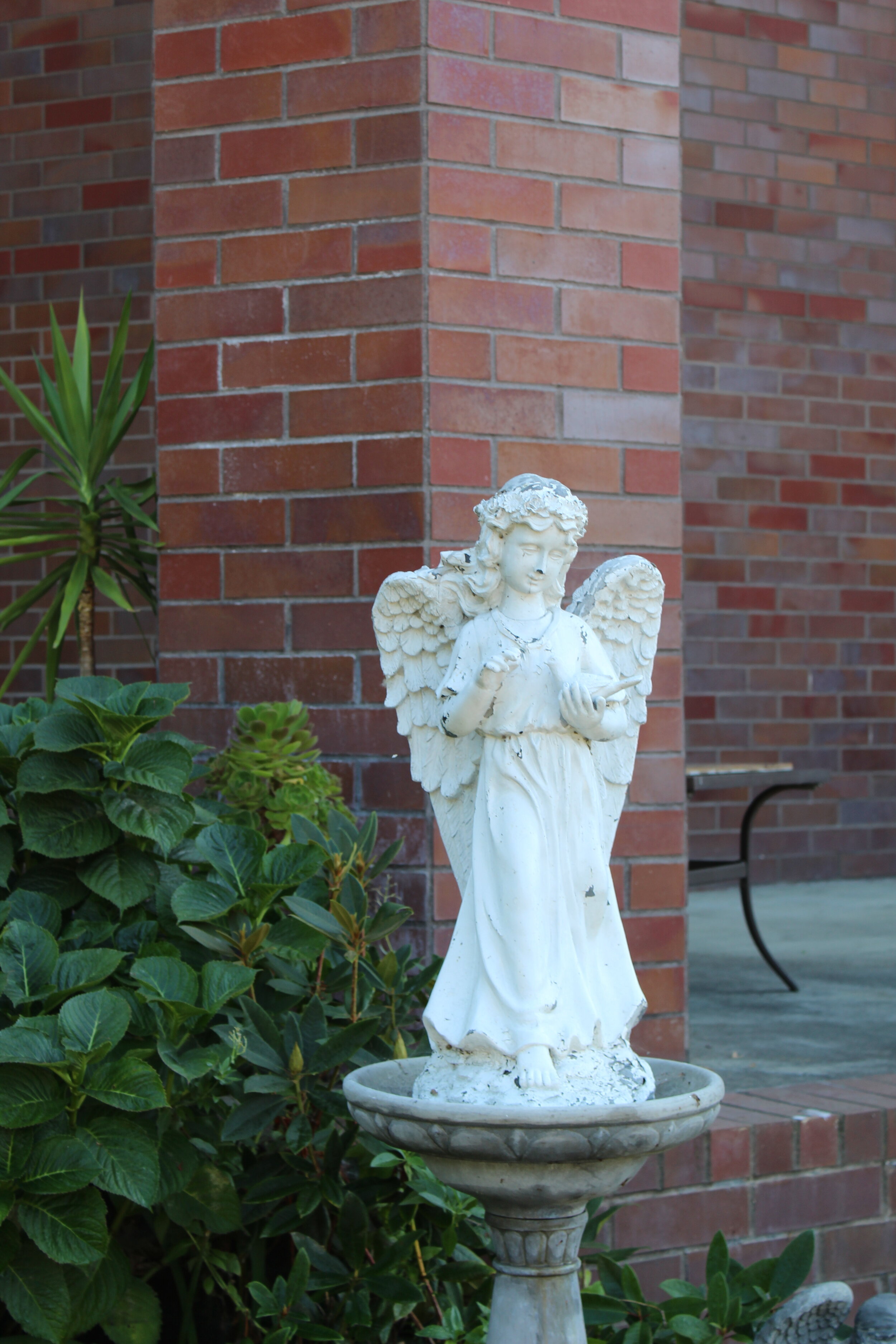
Homily on Mercy, Love and Compassion (based on the Parable of the Rich Man and Lazarus; Luke 16: 19-31):
An angel appeared at a gathering and told the leader of the group that he had come to reward the leader for his years of devoted service. The leader was asked to choose one of three blessings: either infinite wealth/money, or infinite fame or infinite wisdom. Without hesitation, the leader asked for infinite wisdom. “You got it!” said the angel, and disappeared. All heads turned toward the leader, who sat glowing in the aura of wisdom. Finally one of his colleagues whispered, “Well, say something.” The leader looked at them and said, “I should have taken the money.”
“Money is not the root of all evil. The love of money is the root of all evil.”
Last week’s Gospel ended with: “You cannot serve both God and mammon.” In today’s Gospel, Jesus tells us what happens as a consequence of loving money, pleasures and comforts of this life more than loving God and our neighbor.
The rich man went to the netherworld not because he was rich. No, it is because of his self-centered preoccupation with his own life and its pleasures. He was so spiritually blinded that he could not, would not even give a little attention to the needs of a poor man lying at his doorstep. That’s the reason he ended up in torment. That’s something all of us need to ponder because there might be a poor man at our own doorsteps.
From hell - the Rich Man raised his eyes and saw Lazarus. But you see – before - the Rich Man never saw Lazarus as a fellow human being. The Rich Man may have noticed Lazarus before but only as a stinky, beggar in dirty clothes begging for food.
In the Gospel we heard two Sundays ago, the Pharisees saw the people Jesus was eating with - only as tax collectors and sinners but God saw them as His children who had gotten lost and needed to be found. That’s the reason Jesus came, and that’s the reason he welcomed sinners and ate with them. He was trying to help them find their way back to God. This was something the Pharisees did not understand – the loving merciful heart of God – how He feels about His people…. about us….
When people hear the word “Mercy”, they often think only in terms of forgiveness… but mercy means also compassion, to “suffer with”, compassion particularly towards those who are in need in one form or another… all around us… even within our own family.
We say that God is compassionate, but we ignore the poor. We say that God loves us and has mercy on us, but we hold grudges against our relatives and friends. Our actions need to truly reflect God's mercy.
The parable in today’s Gospel tells us to open our eyes and our hearts to be more aware of the people around us who need our help. That person, that Lazarus at our gates, might be the means for our own salvation. The truth is - the poor people actually teach us how to love.
Certainly - many of us are living in a world that has provided well for our needs. We are fed, sheltered, supported by family and friends. There is really nothing wrong with all of these… We surely have a right to all of these. The question to us is: What are we doing for those to whom life has not been so kind? – What are we doing for the less fortunate?
Are we walking by the Lazaruses in our own community without seeing them as fellow human beings.
Are we quick to assume that the person begging at the street corner maybe a drug addict, or an alcoholic, perhaps a thief… or perhaps someone who is lazy or who has not worked hard enough?
Of course, we are not all called to be another Saint Teresa of Calcutta but her life of faith gives us a great example and insight into the heart of God.
As St. Teresa of Calcutta shared – that at the heart of her vocation is to respond to Jesus’ words “I thirst” on the cross – Jesus’ longing for the love of the broken bodies of the poor and His desire to offer Himself as spiritual drink to the poor. Jesus wants their love, and He wants to give Himself to them so that they would be free to give themselves back to Him… but the poor cannot - because they are hungry and suffering… They are more concerned about physically surviving.
The ultimate goal of our helping the poor – after providing them with their basic human needs – more importantly - is for the poor to also encounter and know Christ Who is the key to everything… With Christ, you have everything.
At the end of our lives, we are all going to be called to give an account for all that we have been given – either much or little. We need to be always reminded and challenged with this verse from the Gospel of Luke, 12:48: “Much will be required of the person entrusted with much, and still more will be demanded of the person entrusted with more.” .. and we have all been given much more…
These words are frightening because they apply to us who live in the richest and most materialistic nation in the world.
What kind of sin the Rich Man ended up in Hell for? The sin of omission. We don't think about that, do we? Usually when we go to confession – if we go to Confession – that is another story - we say, "Father, I did this, I did that, I thought about this, I had too much of that,-- But again, the sin that sends the Rich Man to Hell, is actually his indifference to the poor… He is disconnected… He has no compassion…
It is not enough that you do not do bad things. The question is: Are you doing anything good for others who cannot pay you back?
My brothers and sisters - Are we not the “rich man?”
This famous Gospel parable challenges us, it does not condemn us. It is meant to bother us, to disturb us, to get under our skin, so to speak. What are we doing in our lives to take care of the poor?
Everyone of us here, when we stand before God on that day of judgment, will be judged on WHAT WE HAVE FAILED TO DO, not so much on what we have done. Sometimes we look at what we have done and say, "Oooh, look at what I have done or accomplished." When we focus on that, we forget what we have failed to do.
In Matthew’s Gospel: Jesus said, "I assure you, as often as you neglected to do it to one of these least ones, you neglected to do it to Me.”
In the Gospel reading, the rich man cried: “but if someone from the dead goes to my brothers, so that he may warn them, they will repent.”
Maybe, if someone were to rise from the dead, we would change our priorities. Maybe if someone were to rise from the dead we would be infinitely more concerned with the spiritual than we are with the physical. Maybe if someone were to rise from the dead we would use our gifts, our talents, our intelligence, and our possessions to reach out to others in need.
But you know what? Someone has already risen from the dead. He calls us to have faith in Him - instead of faith in our possessions. His name is Jesus – our brother. Today, we plead with Him to help us be truly Christians and merciful.
God bless…
Cycle C – 26th Sunday of Ordinary Time
(Amos 6:1, 4-7; 1 Timothy 6: 11-16; Luke 16: 19-31)

New Parish Website
We are excited to announce the launch of our new parish website on the same day as our Multi-Cultural Sunday celebration. We hope that visitors and parishioners, new and old, will be able to find information about St. Catherine’s.
Launch
We are excited to announce the launch of our new parish website on the same day as our Multi-Cultural Sunday celebration. We hope that visitors and parishioners, new and old, will be able to find information about St. Catherine’s.
New Features
We would like to highlight some of the new features of our website. Please take some time to look around and feel free to contact the parish office if you have questions, comments, or concerns.
I’m New
Visitors and new parishioners can visit the I’m New page for information about our parish and the ways to get involved.
Get Involved
We have created a Ministries directory so that you can find out about the ways you can grow in your faith and serve your brothers and sisters in our parish community.
Ministry leaders are invited to contact the parish office to update their parish’s contact information and give a short blurb about their ministry.
On Mobile
Our website is now more responsive on smaller screens. When you navigate to the website on a tablet or mobile device, you will see a hamburger icon in the top right-hand corner with the word “Menu”. Click on it to see the navigation menu. Each menu item will have a drop down list of the same pages you will find in the navigation bar on a desktop or laptop computer.

Alternatively, we have links at the footer of every page that show the same links you will find in the navigation bar.
Search
If you cannot find something on our new parish website, we have included a search page. Just find the link to the search menu in the navigation bar and type in what you want to look for.


Online Giving
We have included a link to our online giving platform ParishSoft in our navigation. If you would like to make a one time or recurring donation to our Capital Campaign, visit the Give Online link. We hope to expand our online giving opportunities in the future.
MyParish App
We launched our MyParish app a few months ago. If you have not downloaded it already, we have included links to download the app on our website.


Next Steps
The new website is the next step to grow our church’s communications. As digital communication becomes an increasingly important part of our daily lives, St. Catherine’s hopes to bring others to Christ through whatever means possible.
Thanks
We would like to express our gratitude to the parishioners who have worked on the parish website:
Mathew Perdiguerra for designing our current parish website
Mark Perdiguerra for providing support.
The parishioners of St. Catherine’s who volunteered as website usability testers who gave their feedback.
Angelo deVigal who designed our previous website.

Humbled and Exalted
One of the fundamental facts about human nature—is that we all have this deep desire to know that we are important… That our life has value and meaning… That is not bad. In fact, Jesus never discouraged the desire for greatness. Actually, He constantly encouraged His disciples towards greatness…

Reflection on “Being Humbled and Exalted” based on the Gospel of Luke 14:1, 7-14
One of the fundamental facts about human nature – is that we all have this deep desire to know that we are important… that our life has value and meaning… that is not bad.
In fact, Jesus never discouraged the desire for greatness. Actually, He constantly encouraged His disciples towards greatness. Jesus told even ordinary people: “You are the salt of the earth.” “You are the light of the world.” Jesus actually calls us to be the best person that we can possibly be.
Pope Emeritus Benedict XVI: “The world offers you comfort, but you were not made for comfort; you were made for greatness.”
People receive honor and praise from other people because of achievements or accomplishments but, unfortunately and sadly, at times people are more interested in receiving honor than in actually accomplishing something good and fruitful and so they compromise their values so they can receive honor. Some even say negative things about others so they will look good.
A common human problem – which is not a minor spiritual problem – is people being obsessed or addicted to receiving praise and honor; addicted to being noticed or being mentioned or celebrated.
The truth is – as St. Thomas Aquinas said – honor – in itself – adds nothing to the substance of one’s life. Honor – in itself – adds nothing to our goodness, truthfulness and integrity.
Bishop Robert Barron put it in perspective beautifully. He said: “Supposed you are at home reading a good book, taking in the truth of it in the quiet of your room and not one soul noticing you. There is more value in that than praises of you by a million people.
Supposed you are looking at a beautiful sunset, admiring the countryside, exulting at God’s beauty, not one soul paying attention to you – there is more value and goodness and truth in that than admiration of the whole country.
Supposed you are helping a child with his homework – and no one sees you – there is more truth and substance and being in that simple act of love than in the praises of you by the whole world.”
Do you get it?
In other words – What others think or say about you do not add to your value or substance; What others think or say about you do not add to the reality of who you really are….
Remember also: People see our actions; God sees our intentions.
In the Gospel, Jesus had been invited to a dinner party in the home of one of the leading Pharisees. You see – It was not like one of those fun dinner parties, where friends get together just to have a good time and enjoy each other’s company. This dinner mentioned in the Gospel was one of those where self-important people get together and they spend the entire evening trying to impress each other.
Most, if not all of us, have probably been to at least one such gathering – where people in their conversation drop the names of important people they are connected with and places they have been… “The last time I was in Paris…”, or “I had lunch the other day with Senator.” Or “I own this property or I did this and that…”… My son or daughter is an Executive or has that degree…. “I donated so much to our church or that charity….” And so they demand people to honor them and give them special treatment.
Jesus said: “Those who exalt themselves will be humbled, and those who humble themselves will be exalted” (Luke 14:11)
Humility is the mother of all virtues. The word “humility” comes from the Latin word “humus” which means earth, dirt, or ground. So – to be humble is to be grounded in reality, to live in reality – to be in touch with reality. “Remember that you are dust, and unto dust you will return.” We will all eventually return to dust – a very humbling reality.
On the other hand, the good news is – humility means seeing ourselves as God sees us. We are all important to God – equally. He loves us with an eternal love. So, it does not matter how much money we have in the bank or maybe no money – nowadays – for some people; it does not matter whatever kind of car we drive, whatever house we live in, whatever our status in life may be – in the eyes of God, we are important. We do not have to prove it. We can simply accept it. Each of us is important to God.
That is reality and that is what really matters.
Jesus said: “The hairs of your head are numbered.”… “Not one sparrow falls to the ground without the awareness of God. You are of more value than many sparrows.”
St. Paul said in his letter to the Galatians (Gal 2:20) – which we can say of ourselves: “The Son of God loved me and gave himself for me.” That is how important we all are to God.
Humility is acknowledging that everything we have or have accomplished – they are all by the grace of God… meaning – acknowledging the power, the glory, the goodness of God in our lives, and therefore giving thanks and glory to God for everything. If people think that we are good or that we do things well – we should give the glory to God….Who is working through us.
The Gospel reminds us – that we – who are gathered around our Eucharistic table – the table of the Lord – the banquet of the Lord – which is not like the banquet mentioned in the Gospel – we, who are gathered around the table of the Lord are reminded that regardless of our social status or wealth or power and importance – we come to the Eucharist as brothers and sisters of equal standing before God. We recognize one another as brothers and sisters in the Lord, and together – we call God – “Our Father.”
That is why we do not have seating arrangements here.
If we really want to be important, we need to turn our attention to our brothers and sisters – particularly to those who are in need and show them that they, too are important to us.
That is why in the second part of the Gospel reading, Jesus addressed the host or the one giving the banquet. The host had obviously invited those who could benefit him in the future… those who could return the favor. The host only appeared to give the dinner for others, but in fact – he did it for himself.
Jesus basically said – and this is the basis of Catholic social teaching – that if there is any preferential treatment, if we are ever going to give a special attention or preference – it should be towards the poor, the lame, the blind, the handicapped, the marginalized members of our society – to those who cannot pay us back. … and we “will be repaid at the resurrection of the righteous.”
The Gospel is basically telling us: “Forget about looking important, forget about trying to be honored, forget about yourself and concentrate on serving other people…. because there is no other way to genuine greatness. In short – the message is about humbling ourselves before the Lord, taking care of the poor, and when we do this, God will lift us up. Amen.
Twenty-Second Sunday in Ordinary Time – Cycle C
Luke 14:1, 7-14

Persevering in Faith
We know for a fact that the best athletes in the world, who personify perfection, made a lot of sacrifices to be what they are. They lived a very disciplined life, they gave up certain pleasures. For many months and years, they made up the time to exercise and practice because that is how badly they want to win the gold medal…
Reflection on “Persevering in Faith” based on the Gospel of Luke 12:49-53 and Letter to the Hebrews 12:1-4
We are now beginning to hear more and more about the upcoming Summer Olympics.
We know for a fact that the best athletes in the world, who personify perfection, made a lot of sacrifices to be what they are. They lived a very disciplined life, they gave up certain pleasures. For many months and years, they made up the time to exercise and practice because that is how badly they want to win the gold medal…it is pretty much their life.
On the faith note: The question to us is: Who wants to get to heaven? Similarly, how much or how badly do you really want to go to heaven? What are you doing about it?
Remember: We are just pilgrims in this journey of life, just passing through – because our true home is in heaven.
The author of the letter to the Hebrews used athletic analogies such as: “Life of faith is a race.” … “Let us persevere in running the race that lies before us while keeping our eyes fixed on Jesus.”
What we heard from our second reading from the letter to the Hebrews is not so much a call to believe or to enter the faith. We are already believers but the call is a call to remain in the faith. The challenge is to endure in the way of faith. The letter was addressed to the Christians who were in danger of falling behind or dropping out of the race… so to speak.
To be able to continue in the race towards the finish line, we need to be aware of the unnecessary weights or baggages we have been carrying that hold us back. We need to learn to travel lightly in this journey of life.
It’s interesting, and sadly ironic, that so many in our society, with all due respect, are obsessed with losing weight while so much of the world exist on the edge of starvation.
Carrying too much weight can be dangerous. Physical concerns aside, similarly, carrying too many things in our life can keep us from getting to our destination.
Think about the weight of our possessions. It is NOT that possessions or money themselves are evil, but that they can become a deadly weight. The love of money is the root of all evil. (1 Timothy 6:10)
We need to realize how many of our daily decisions are based on money matters, financial concerns, consumerism and owning things.
Secondly – Consider the weight of our responsibilities. It is good to be responsible. But, if we are not careful, we can take on so many responsibilities, all representing worthy efforts, that we don’t have time for the most important things. That is why Jesus told Martha when she complained about her sister Mary sitting and listening to Jesus: “Martha, Martha, you are anxious and troubled about many things, but one thing is necessary. Mary has chosen the better part, which will not be taken away from her.”
Pope Francis said: If we do not pray, we will not know the most important thing of all: God’s will for us. And for all our activities, our busy-ness, without prayer, we will accomplish very little.
Thirdly, how about being so weighted down with worry that we cannot move; that we are paralyzed. Some worry is natural and appropriate. But to worry about everything, or to worry excessively over things over which we have no control, is wasted energy, wasted time, and wasted living. It may also be a sign of lack of faith. Faith is an invitation to trust God in all things.
As someone has said: “Worrying does not take tomorrow’s troubles; worrying takes away today’s joy and peace.”
The goal of living in God’s presence on earth as it is in heaven, demands sacrifice and much discipline… just as what athletes go through – that is how they make it look so easy – after much training to prepare… and overcoming obstacles and challenges and staying focused on the goal.
From our first reading, the prophet Jeremiah was a royal prophet at the Kings court but he refused to tell the king what the king and the people wanted to hear. And so, because Jeremiah stood for the truth, he was berated and mocked… was thrown into a cistern.
Our faith tells us that it is truly difficult, to say the least, to stand for what it right and true. It is difficult to stand for the Lord because we will be persecuted and mocked. We live in a very secular and even atheistic society. Yet, we have to meet the challenges of Christian life, and we have to overcome all the obstacles to the truth that society put in our way.
That is what Jesus did. He stood for the truth and was put to death. But he was not going to compromise the Word of the Father. If this meant denouncing the leaders of the Temple, he would do so. If this meant criticizing even his closest followers, he we do so. If this meant journeying to Jerusalem where he knew he would be killed, he would do so.
It is in this context – that we can understand the difficult gospel for this Sunday; the division, the conflict, even among family members, predicted when Christians accept and embrace the challenges of Christian life. The strife and the sword that the Lord’s presence will instill in the world; again even in the family.
“From now on a household will be divided,
a son against his father,
a mother against her daughter
a mother-in-law against her daughter-in-law”
Meaning – To give you a practical example –
Parents will be criticized for setting moral standards within their homes. Their own children will tell them that they need to “get real”; “everyone’s doing it; it is the twenty-first century…We are in America, first world country…” Therefore, children demand and expect as their right – that they should be allowed to do what everyone else is doing; which – in reality – is just contemporary immorality… Parents have to put up a terrible struggle to stand for what is right and true in their own homes, with their own children.
When division comes – how will you respond? … with anger, much arguments and condemnation; or with compassion, prayers and understanding?
The ultimate goal of the parents for their children is for their children to go to heaven.
My brothers and sisters, the readings today tell us: Trust in God. You do not struggle alone.
We heard from our second reading: “We are surrounded by so great a cloud of witnesses…
Meaning – We are surrounded by the saints of the past and saints of our time in a unique way. It is a figure of speech – imagine we are running towards the finish line and the saints are cheering us on to the same victory in the life of faith that they obtained. We are to be inspired by the godly examples these saints set during their lives. Actually – they are not just spectators to the race we are running… They help us and intercede for us.
We need to keep in mind also that – As we race towards the finish line, so to speak… The Lord is not just a spectator or a coach at the sideline or at the ringside – as in boxing. The Lord is with us inside the ring, in the battle. We need to keep in mind what the Lord Jesus said (Gospel of Matthew): “And know that I am with you always until the end of time.”
At the end of our life, let us hope and pray that we can say what St. Paul told Timothy (2 Timothy 4:7) – “I have fought the good fight, I have finished the race, I have kept the faith. Now there is in store for me the crown of righteousness – which the Lord, the righteous Judge, will award to me on that day—and not only to me, but also to all who have loved his appearing. (2 Timothy 4:7-8)
God bless.
Twentieth Sunday in Ordinary Time – Cycle C
Lk 12:49-53; Hebrews 12:1-4

Multicultural Sunday
St. Catherine of Siena is celebrating the multi-cultural heritage of of our parish families by hosting a Multi-Cultural Sunday on September 29th.
St. Catherine of Siena is celebrating the multi-cultural heritage of of our parish families by hosting a Multi-Cultural Sunday on September 29th.
The festivities includes multilingual mass at 12:00 PM and fellowship with food and entertainment. Everyone is invited to join us, free of charge.
We encourage you to participate by hosting a tent and decorating it with the items that represent your respective countries, preparing and sharing your ethnic dishes or delicacies for sampling, and showcasing ethnic or cultural performances.
We hope to see you there.

New Fencing: Safety First for Our Students
Thank you to our parishioners for your generation support of the St. Catherine of Siena Parish School during Mass second collections. We have begun our fencing project on the other side of our junior high building...
Thank you to our parishioners for your generation support of the St. Catherine of Siena Parish School during Mass second collections. We have begun our fencing project on the other side of our junior high building.
Installation of fencing is taking place at this time, with an expense of approximately $9,000 due to required safety mechanisms.
Interested in donating money towards the gates to increase our children’s security?
Please contact our St. Catherine of Siena Parish School Principal, Christina Walsh. Donations are gladly accepted and welcome! Thank you for your continued support of our parish schol

The Foolish Rich Man
My brothers and sisters, time is running out. Life should be lived with eternity in view. That is the truth, and only a fool refuses to face the truth. What is Jesus telling us in this parable? He is saying that we should be wise. Include God in your plans…

Reflection on “The Foolish Rich Man” – based on the Gospel of Luke 12:13-21 – August 4, 2019
This is a story for our time. Even the word “fool” seems to have special designation for our time. Many in our culture would not object to being called “a sinner”. That has a sort of a daring daredevil adventurous sound to it. But none of us wants to be thought “a fool”. We like to believe that we are thinking, intelligent people.
I think this is the only time in the Scriptures when God points at a particular man and says, “you fool”. What kind of man was he? There were a number of things about him that are quite commendable. He was obviously a hard worker, a careful planner, a good businessman. These are traits we all admire. There is nothing wrong with working hard and being thrifty with our money. The truth is God called him a fool, not for what he did, but for what he failed to do – the things he left out of his life. His story has something to say to you and me… let me point out just three things.
First – His story tells us that it is a foolish thing to leave God out of our lives. It seems that it never occurred to him that his abundance was a blessing from God or that his future was dependent upon God.
Financial success is an enviable accomplishment. But when that experience comes, the person who is truly wise understands that, in large measure, it is all by the grace of God, a gift. When the nation of Israel was looking toward the promised land of milk and honey, Moses said: “You shall remember the Lord your God for it is He who gives you the power to get wealth.
The rich fool apparently forgot that. He thought that all of his success was due to his own genius and efforts.
It is a good thing to plan for the future, but it is wise to remember that all of our plans are contingent upon God. St. James talks about this in his epistle on practical Christianity. He said: “Some of you are planning to go to a certain city, stay there for one year, buy and sell and earn a profit. You do not even know what tomorrow will bring. You ought to say,” If the Lord wills, we will live and do this or that.” (James 4:13-17 ESV) That is why we hear people say: “God willing, I will see you tomorrow.”
It is wise to remember that our lives are in the hands of God. It is nothing but foolishness to leave God out of our plans.
We hear people on the news or you probably know of people who prepared well for life, became financially independent, stayed physically healthy – but shortly before or after retirement which they looked forward to – got into accident or suffered a heart attack, and just fell dead, etc.
Life at best is so fragile and insecure. We are so dependent on God. Nothing could be more foolish than to leave God out of our lives.
Secondly, it is foolish living to ignore our spiritual needs. The rich fool seemed to live his life on a physical and material plain.
He told himself: “Now you have it made. Eat, drink and be merry.”
What he failed to realize is that there was a very real part of his nature that needed something more that food and fun.
There is something special about a human life that cannot be explained in terms of the physical. The life of a man, woman, or child somehow is sacred and we all know it. What makes a human life so important? It is as simple as this: people are made in the image of God, capable of fellowship with God, endowed with spiritual possibilities that are almost unlimited. Let us not forget this basic truth about our nature.
No one is denying that we are physical creatures with physical needs. We need food, clothing, houses, cars and all the rest. But we are also spiritual creatures with spiritual needs. We need purpose. We need meaning. We need the joy that comes from serving. We need communion with God. We need a sense of divine approval. These needs are just as real as food and drink. Let us not turn our backs on this part of our nature. Only a fool ignores his spiritual needs.
Thirdly, one last thought: it is a foolish thing to forget eternity. The man in our story seemingly thought only in terms of time. He spoke of “many years”. He did not have many years. He actually had less than one day. But would “many years” have really mattered? They would all be gone by now. Sooner or later time runs out for all of us. This life is not forever. Every one of us has a limited supply of time. I do not know how much time I have left or how much time you have left.
What I do know is that we have one day less than we had yesterday. We are running out of time. We are moving toward eternity. All of life should be lived in the light of that truth.
My brothers and sisters, time is running out. Life should be lived with eternity in view. That is the truth, and only a fool refuses to face the truth.
What is Jesus telling us in this parable? He is saying that we should be wise. Include God in your plans. Pay attention to our spiritual nature. Live your life against a backdrop of eternity. These truths embody the very essence of wisdom.
Let me close by sharing this story many of you might have heard but it is worth sharing again – it is fitting.
Once upon a time there was a rich King who had four wives. He loved the 4th wife the most and adorned her with rich robes and treated her to the finest of delicacies. He gave her nothing but the best.
He also loved the 3rd wife very much and was always showing her off to neighboring kingdoms. However, he feared that one day she would leave him for another.
He also loved his 2nd wife. She was his confidant and was always kind, considerate and patient with him. Whenever the King faced a problem, he could confide in her, and she would help him get through the difficult times.
The King’s 1st wife was a very loyal partner and had made great contributions in maintaining his wealth and his kingdom. However, he did not love the first wife. Although she loved him deeply, he hardly took notice of her!
One day, the King fell ill and he knew his time was short. He thought of his luxurious life and wondered, “I now have four wives with me, but when I die, I’ll be all alone.” Thus, he asked the 4th wife, “I have loved you the most, endowed you with the finest clothing and showered great care over you. Now that I’m dying, will you follow me and keep me company?”
“No way!”, replied the 4th wife, and she walked away without another word. Her answer cut like a sharp knife right into his heart.
The sad King then asked the 3rd wife, “I have loved you all my life. Now that I’m dying, will you follow me and keep me company?”
“No!”, replied the 3rd wife. “Life is too good! When you die, I’m going to remarry!” His heart sank and turned cold.
He then asked the 2nd wife, “I have always turned to you for help and you’ve always been there for me. When I die, will you follow me and keep me company?”
“I’m sorry, I can’t help you out this time!”, replied the 2nd wife. “At the very most, I can only send you to your grave.” Her answer came like a bolt of lightning, and the King was devastated.
Then a voice called out: “I’ll leave with you and follow you no matter where you go.” The King looked up, and there was his first wife. She was so skinny as she suffered from malnutrition and neglect. Greatly grieved, the King said, “I should have taken much better care of you when I had the chance!”
In truth, we all have 4 wives in our lives: Our 4th wife is our body. No matter how much time and effort we lavish in making it look good, even with all the modern day plastic surgeries, it will leave us when we die. Our 3rd wife is our possessions, status and wealth. When we die, it will all go to others. Our 2nd wife is our family and friends. No matter how much they have been there for us, the farthest they can stay by us is up to our grave. And our 1st wife is our Soul.
Often neglected in pursuit of wealth, power and pleasures of the world. However, our Soul is the only thing that will follow us wherever we go. Cultivate, strengthen and cherish it now, for it is the only part of us that will follow us to the throne of God and continue with us throughout Eternity.
Let us feed our soul with the Word of God, with the Eucharist, the Body of Christ, the Bread of Life for our journey towards our true home, which is heaven.
God bless…
18TH SUNDAY IN ORDINARY TIME – CYCLE C
AUGUST 3/4, 2019

My Vocation is Love - Young Adults Retreat
Please join us for our Young Adult Retreat, “My Vocation is Love”
Please join us for our Young Adults Retreat, “My Vocation is Love”
We have three guest speakers. The retreat will also include breakfast, lunch, and inner. The cost of the retreat is $35.00 for individuals and $60.00 for married couples.
If you would like to register, visit our registration page.

Catholicism: Faith Formation Program
Journey around the world and deep into the faith. With creator and host Bishop Robert Barron, you will learn what Catholics believe and why while being immersed in the art, architecture, literature, beliefs and practices of the Catholic tradition.
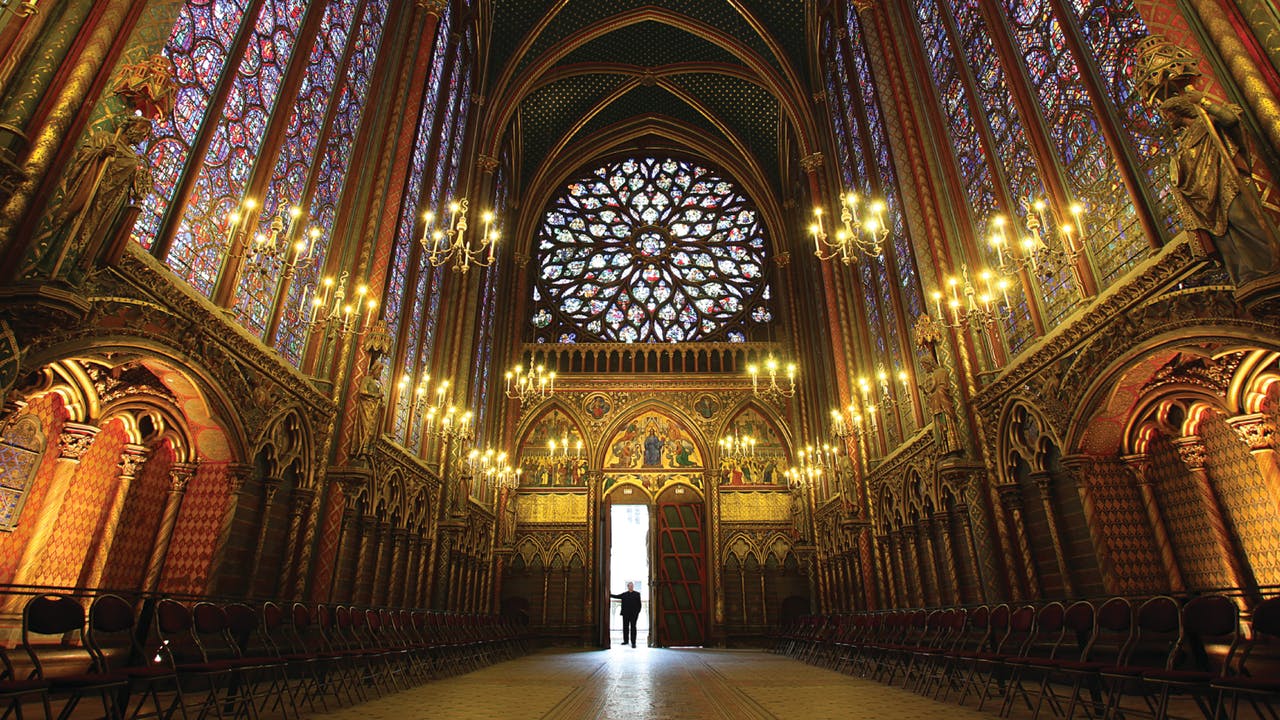
Journey Around the World and Deep into the Faith
The Church has proclaimed the good, the true and the beautiful for two millennia.I don’t know of a project that has shown that in a more dazzling way than Catholicism.
—Timothy Cardinal Dolan, Archbishop of New York
With creator and host Bishop Robert Barron, you will learn what Catholics believe and why while being immersed in the art, architecture, literature, beliefs and practices of the Catholic tradition.
The Catholicism Faith Formation Program brings the beauty, goodness and truth of the Church to life so that you can better understand and share your faith.
Bishop Robert Barron is an acclaimed author, theologian and podcasting priest.
An innovative teacher of the Catholic Faith who uses the tools of the new media to further the New Evangelization, Bishop Barron is also the founder of Word on Fire Catholic Ministries.
Wednesday, July 31, 2019 at 7:00 pm
Parish Life Center Main Hall
Deacon Bobby Peregrino
707-342-0410
bperegrino@comcast.net
No Cost. Just your time and desire to learn more about our Catholic Faith.

Loving Our Neighbor
Mark Twain once said that it was not the parts of scripture that he did not understand that gave him the most trouble, but the parts that he did understand! I think we can all relate. All of us struggle with the understanding of some aspects of theology…

Reflection on “Loving Our Neighbor” – Based on the Gospel of Luke 10:25-37 – July 13, 2019
Mark Twain once said that it was not the parts of scripture that he did not understand that gave him the most trouble, but the parts that he did understand!
I think we can all relate. All of us struggle with the understanding of some aspects of theology and Biblical interpretation. But perhaps the greatest test of our faith is not whether we can understand deep mysteries, but whether we can be obedient to the teachings of our faith that are perfectly clear to us.
For example: Have no other gods before the one true God. Honor your parents. Do not steal. Do not commit adultery. Tell the truth. Learn to be content and be satisfied with what you have, and do not be envious of your neighbor’s possessions; Love your neighbor as yourself.
You see – We clearly understand these commandments.
The difficulty is living up to the ideals of these words. Our minds can grasp the truth. It is our feet, our mouths, our hearts, our hands that have trouble living by the truth our minds know.
The Bible can be a frustrating book in the sense that at times it simply does not provide the kinds of answers we are looking for. Ask Jesus a question about heaven and he’ll start talking to you about your neighbor!
Like in our Gospel story, when asked about eternal life by a scholar of the law, Jesus replied: Love God with your whole being and love your neighbor as yourself. It wasn’t the answer the scholar of the law wanted, so he asked Jesus, “Who is my neighbor?”
For the scribes and Pharisees of Jesus’ time – To the question: Who is my neighbor? Their response was: Only those of my own people, another Jew. Maybe only another Pharisee. Not a Gentile. Certainly not those half-breed Samaritans. The scribes and Pharisees were trying to find the limits of their obligation. Their real question was, in other words: “What is the least I can do and fulfill my duty?” We can all relate to that.
People ask: What is the least I can do to get to heaven? …to inherit eternal life?”
… minimal Christians so to speak.
What is your concept of heaven? People say heaven is about life after death. Unfortunately – that is all it’s about for most people.
But the Scripture presents heaven as a quality of life. It is fulfilled beyond this life, but it begins here. Jesus said: The kingdom of heaven is at hand. That is why we pray: “Thy kingdom come, thy will be done on earth as it is in heaven.” It is a God-like quality of life that is only found through self-giving, self-sacrificing love… as Jesus showed in His life.
People often think of heaven in a self-concerned way… and so they are afraid of death because they focus on self-preservation. Psychological studies show that the more self-centered you are the more you fear death. But the more you live for other people and other purposes, the less threatening death is.
If we live our lives – with self-giving, self-sacrificing love of God and others – in communion with Christ, who gave His life for our sake, then we will find ourselves are at peace knowing that any day is a good day to die… because heaven is actually our true destiny
Where is heaven? We will find it first in the neighbor who is in need. The poor and those who are in need or are helpless and those who cannot pay us back – they teach us how to love. Where love is = God is = because God is love. Heaven is where God is.
Jesus made a Samaritan the hero in the parable of the Good Samaritan. Samaritans were former Jews who had intermarried with Gentiles. The Jews of Jesus’ time saw Gentiles as godless and sub-human. They had complete contempt for Jews who married Gentiles, and that is why they rejected Samaritans.
Jesus’ point is that God is pleased with any person who understands that the neighbor is every other person, especially someone in need. God does not favor one race, or one nationality, or one socio-economic class over another.
Jesus made it very clear that we love, and give, and help, not just for the sake of the other person, but for our own sake. It is for the good of our own soul that we must care, and love, and give ourself.
What does the story of the Good Samaritan mean for us? In the simplest terms – it means that the truly righteous person knows that the neighbor is whoever is there. Your neighbor is the next person you meet…the one sitting next to you at this moment. Forget borders, race, and language. God’s neighborhood includes everyone. God calls us to be a neighbor to everyone…not only those of our own people.
Admittedly, it is really a risky business to get involved in human need. You could be deceived and played for a fool. You could end up wasting your time and effort. You could even get hurt!
No doubt, the Samaritan recognized all of those possibilities. Still he took the risk of becoming personally involved. He gave his own time. In short, he did for that man what he would have wanted someone to do for him, if he lay wounded beside the road. He loved his neighbor as himself.
Love to him had real meaning. Love meant risks taken, time given, money spent and service rendered. He knew how to love in a practical and personal way.
Jesus is the ultimate Good Samaritan and we are the victim on the side of the road.
Jesus risked everything to save us. He has become a neighbor to all of us…even while we are still sinners.
What does it mean for you and me? We must open our eyes to those people who are in need, whose wounds may not be as dramatic as the victim in the parable, but still no less real.
We probably walk right past them almost every day. Some are wounded by loneliness, some by fear, some by guilt. Some have been beaten and robbed by economic circumstances beyond their control. They may live next door, or across town, or even under our own roof. Wherever they live, whoever they are and whatever their need might be, Jesus describes them as neighbors. And Jesus placed upon every one of us the responsibility to love each one of them, even as we love ourselves.
St. Teresa of Avila said it so beautifully:
Christ has NO body now on earth but yours.
Yours are the eyes with which He looks with compassion on this world.
Yours are the hands with which He blesses all the world.
Yours are the feet with which He walks to do good.
Christ has NO body now on earth but yours.
In other words –
Be other Christ in the world.
Who wants to go to heaven?
Then love your neighbor as Jesus loves you.
My brothers and sisters in Christ – God loves you!
Now – please turn to each other – left and right… and see in each other a neighbor to love… whom God loves.
And say “And I love you, too!”
Mean it.
God bless…
FIFTEENTH SUNDAY IN ORDINARY TIME – CYCLE C – July 14, 2019
Luke 10:25-37
Deuteronomy 30:10-14

RCIA Workshop Series
Presented by the Diocesan RCIA Committee, this series is designed for RCIA Coordinators, Team Members, Catechists and those working with the process of the Rite itself, the preparation needed to implement the process in a parish.
All sessions 9:30am–3:30pm
St. Catherine of Siena Parish
3450 Tennessee Street, Vallejo, CA 94591
July 27, 2019: RCIA Overview I
September 14, 2019: RCIA Overview II – Accompaniment & Conversion
November 16, 2019: RCIA Overview III – Celebrating the Rites
$35 per session
Cost includes morning hospitality, lunch and materials
Presented by the Diocesan RCIA Committee, this series is designed for RCIA Coordinators, Team Members, Catechists and those working with the process of the Rite itself, the preparation needed to implement the process in a parish.
For more information contact Martha Haig at mhaig@scd.org or 916-733-0131.
RCIA Workshop Series
Follow the Diocese of Sacramento Office of Family & Faith Formation @scdformedfaith

Freedom and Following Jesus
No word is more important in the American heritage than “freedom.” As Patrick Henry, the American patriot even said: “Give me liberty or give me death.” Ask anyone what freedom means, and the answer is likely to be about freedom FROM something…
Reflection on “Freedom and Following Jesus” – based on the letter to the Galatians 5:1.13-18 and the Gospel of Luke 9:51-62
On Thursday is July 4. Americans will celebrate Independence Day.
No word is more important in the American heritage than “freedom.” As Patrick Henry, the American patriot even said: “Give me liberty or give me death.”
Ask anyone what freedom means, and the answer is likely to be about freedom FROM something – – – freedom from restrictive rules and regulations of authority – even freedom from parents, freedom from paying mortgage, freedom from bad relationships, etc.
Meaning – We have understood freedom almost often or primarily only as freedom FROM something or someone.
The problem is, Freedom in all its beauty and gift from God, can be also the biggest obstacle on our way to God because freedom is often abused by us.
For example, look at the drug addict. He demanded the right to do as he pleased. Those silly medical warnings and legal prohibitions would not restrict his freedom. But now – he is no longer free. Drugs have taken control of his life.
We hear people say – this is my life – this is my body. I am pro-choice. I can do whatever I want with my body. Yes – you have free choice but please, always choose life!
St. Paul reminds us that freedom is not only a privilege, it is also a responsibility – and it must be exercised within certain boundaries…
Remember: We are wrong if we define freedom as the ability to do whatever we want without having to bend to any sort of authority or moral law.
We cannot let our freedom be destroyed by our lack of legal or moral restraints especially disregarding sexual restraints – and disregard for strict rules of moral correctness.
A lot of people have this misconception that to be a Christian, to follow Christ means the end of real life – “end of having good times” and the beginning of bondage to rules and guilty conscience.
The truth is – Being a Christian, yes – we belong to Christ… Christ reigns in our life… no one else or nothing else in all the world is to gain control of our life…. But it does not diminish our freedom but rather protects it… To be mastered by Christ is to be set free to enjoy and experience life to its fullest. You see, that’s paradox. To be a slave to Christ is to be truly free… As Jesus said: “Know the truth and the truth will set you free.”
For Christians, freedom is the ability to be the unique person that God created each of us to be. We all know this and experience this. We are at our happiest when we are at our best. Yes, we have responsibilities, and, yes, we have authority over us, but this does not limit our freedom.
God’s laws/commandments given through His Church actually leads us to true freedom – to be our true selves as God meant us to be… free to love.
Freedom as only freedom FROM – is ultimately destructive.
And so, we need to discover what we are free FOR. Once we are free – We need to ask the question: What new opportunities are we now able to embrace, what new commitments are we now finally free to make?
We are reminded not to use our freedom as a license to selfishness, but to serve one another in love. We do not have the right to do anything that hurts someone else… Our lives are intertwined and involved in the lives of other people.
When we are free to be our true selves as God created us, then we allow His reflection to be seen or experienced by others.
There are so many people who are like that, be they canonized saints, or members of your own families, and many of you who are continually at your best because you have God at the center of your lives, you try to follow Christ the best you can and are always giving to others.
If at any time in your lives others can see Christ in you, even if it is only a glimpse, then you are truly free, free to be who God meant you to be.
Again, freedom is not being able to do whatever you want whenever you want however you want… where anything goes. We now live in such a society. Sin is basically telling God:
“God, I know what you want. I do not care. I will do what I want.”
That is slavery to sin but people call it “freedom”.
This is what St. Paul is speaking about in the second reading.
“Brothers and sisters: For freedom Christ set us free; so stand firm and do not submit again to the yoke of slavery. For you were called for freedom. But do not use this freedom as an opportunity for the flesh; rather, serve one another through love.”
We cannot just say we are Christian. We have to be determined to live the Christian life… But this takes courage. This takes determination.
Think of Elisha in today’s first reading. He was so determined to heed God’s call and follow Elijah that he slaughtered his twelve head of oxen and burned their yokes… which means – no more turning back for him. We are called to have same that determination… and by the grace of God – We can conquer anything that is holding us back from being our best selves.
Like Jesus in today’s Gospel, we must be resolutely determined to do whatever the Father’s will is for us. We can be our best selves. We men can be Men of God. You ladies can be Women of God.
Some of us who are old enough to remember the old version of the
The Act of Contrition: Oh, my God, I am truly sorry for having offended thee and I detest all of my sins because I fear the loss of heaven and the pains of hell. …
To fear the loss of heaven and to fear the pains of hell can seem like one and the same thing. They’re not. There’s a huge moral difference. Fear of hell is based upon fear of punishment. Fearing the loss of heaven is based upon a fear of not being a good, loving person… not being what we are meant to be. A sign of Christian maturity is when we are more worried about not being loving enough than when we’re fearful that we will be punished for doing something wrong.
As we mature more in our spirituality, we need to learn to worry less and less about going to hell and we need to worry more and more about the bitterness, anger, ingratitude, and non-forgiveness that still remains in our hearts. Let us worry less about committing a mortal sin and let us worry more about whether we are gracious, respectful, and forgiving towards others.
Fear of the pains of hell and fear of the loss of heaven is a good start as our guiding principle but a more mature Christian attitude is to fear offending God because God is all good and deserving of all our love.
We pray and we continue to seek the grace, the wisdom and the courage to be whom God calls us to be. Amen.
13TH SUNDAY IN ORDINARY TIME – CYCLE C
Galatians 5:1, 13-18
Formation Day for Ecclesial Ministers
Hosted by Bro. Fred Castro Speaker: Ian Emperador Lay Ecclesial Minister Requirements: Attend one formation session. Those who may have contact with minors must complete the Diocese's Safe Haven and fingerprinting requirement. Fingerprinting services will be provided at the formation session. Receive the commissioning at any of the Masses of Pentecost. Those unable to attend a formation session must review a session recording and submit a written reflection. Those unable to receive the commissioning must receive it a later date to be announced. Those who do not attend formation, complete Safe Haven and fingerprinting as required, or receive commissioning may not to serve.